
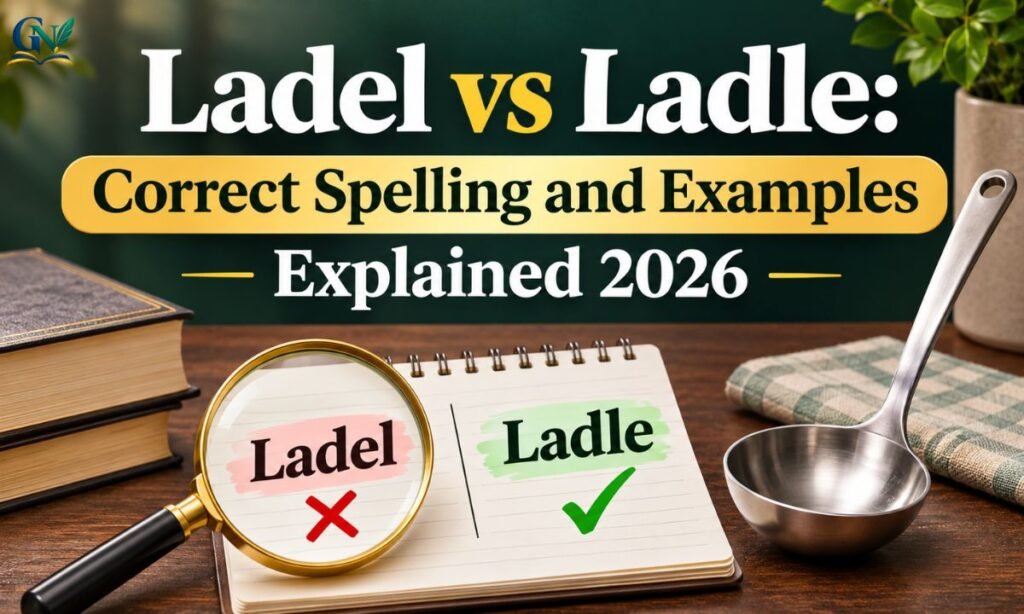
The correct spelling is ladle, spelled L-A-D-L-E. “Ladel” is a misspelling of the long-handled, deep-bowled spoon used to serve soup, stew, and sauces.
This page explains why the mistake happens, how to pronounce the word, where it comes from, and how it works as both a noun and a verb. It also covers ladle types, related terms, and a short practice set.
Quick Answer
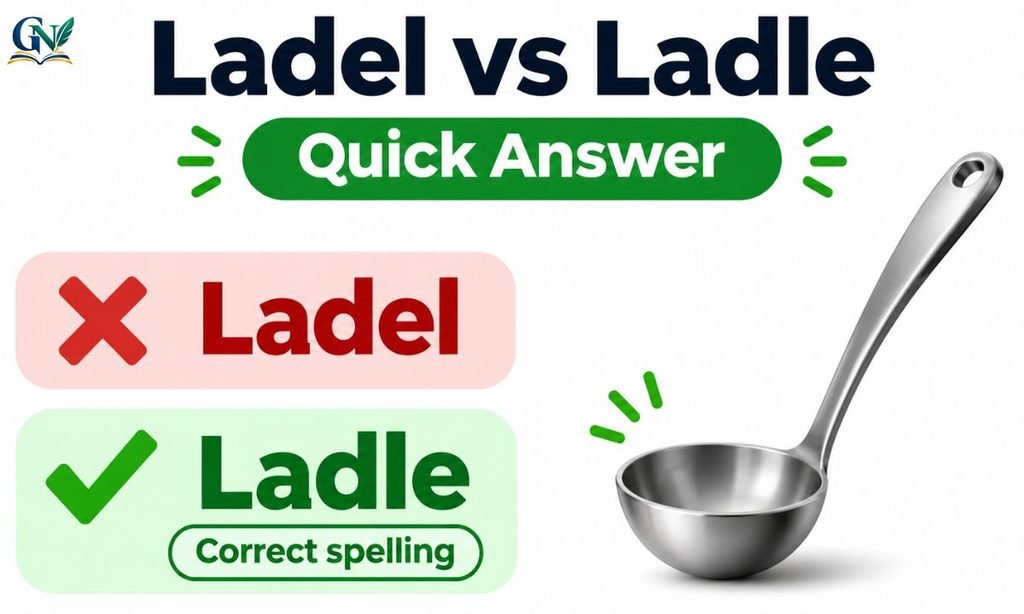
Write ladle. The word ends in “le,” the same ending found in words like “table,” “candle,” and “handle.”
“Ladel” has no standing as a spelling of the kitchen tool in standard dictionaries. It does turn up as a surname variant, but that is a separate matter from the utensil.
- Correct: She filled each bowl with a ladle of chili.
- Incorrect: She filled each bowl with a ladel of chili.
Correct Spelling Explained in Depth Ladel vs Ladle
The standard spelling is L-A-D-L-E, and the same spelling is used in both American and British English. The verb forms follow it: ladles, ladled, and ladling.
The two versions differ only in the last two letters. In “ladle,” the letter L comes before E. In “ladel,” the order is flipped, which creates a pattern that English uses for words like “angel,” “model,” and “level” but not for this one.
A simple memory trick helps. Say the word as “lay-dull,” then notice that “dull” ends the way “ladle” does: the L sound comes last, and the E stays silent. If the final letter in your spelling is L, you have it right.
Meaning of Ladle Definition and Conceptual
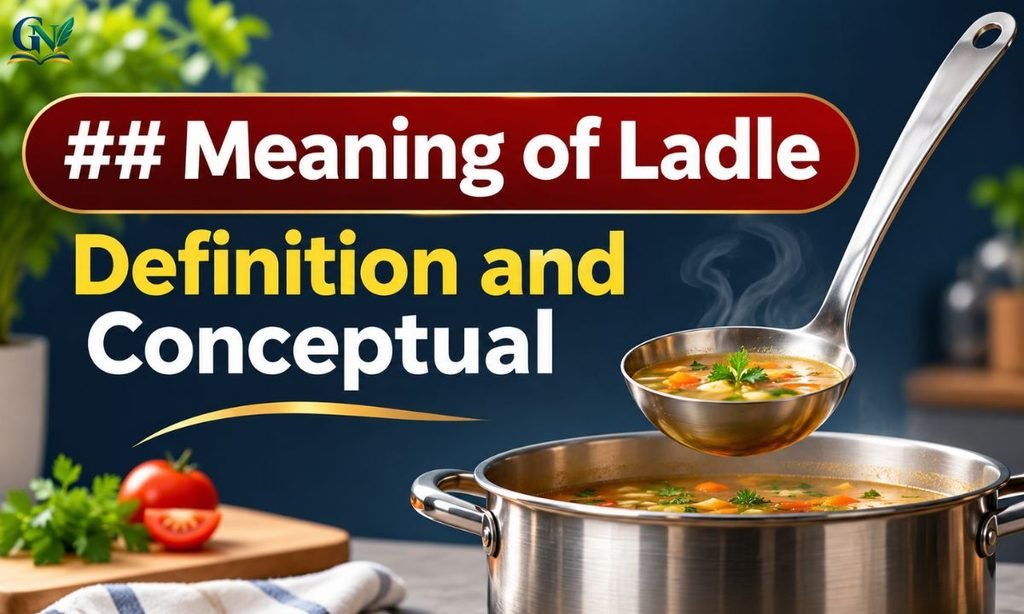
A ladle is a deep-bowled, long-handled spoon used mainly for dipping up and carrying liquids. Merriam-Webster defines it this way, and it also lists a second sense: anything that resembles a ladle in shape or function.
That second sense explains why the word appears outside kitchens. Foundries use a ladle, which is a vessel that carries and pours molten metal. The tool is different, but the idea is the same: scoop a liquid from one place and deliver it to another.
As a verb, to ladle means to take up and move something with a ladle. It also works figuratively. People speak of ladling out criticism or ladling on the guilt, meaning handing it out in large, generous portions.
Ladle in Cooking: Real Culinary Function and Importance
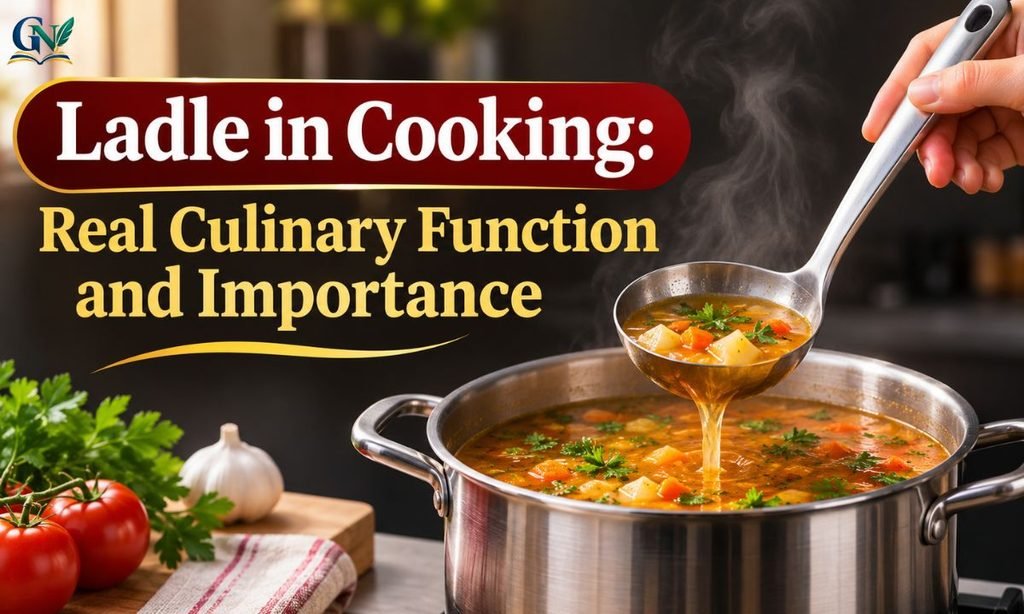
The ladle exists to solve a basic problem. Pouring hot soup straight from a heavy pot is messy and unsafe, while a flat spoon cannot hold enough liquid to be practical. The deep bowl holds a measured amount, and the long handle keeps the hand away from heat and steam.
Cooks use ladles for more than serving. They transfer stock into smaller containers, add sauce to a plate, portion batter onto a griddle, and skim fat or foam from the surface of a simmering pot. A ladle also doubles as a rough measuring tool, since each size holds a fairly consistent amount.
Pronunciation Breakdown Ladle Pronunciation Explained Clearly
“Ladle” has two syllables and is pronounced LAY-dul, written in phonetic symbols as /ˈleɪdəl/. The stress falls on the first syllable.
The first syllable uses a long A, like the vowel in “table.” The second syllable is weak and quick. It is closer to a soft “dl” than to a full vowel sound, which is the key detail that leads to the spelling confusion covered below.
Ladle pronunciation
A common slip is to turn the word into “LAD-ul,” which rhymes with “paddle.” That version changes the vowel and creates a different word sound. Keep the A long, release the D cleanly, and finish with a light L.
How to pronounce ladle in american English
In American English, the D often sounds soft and quick. Say “lay,” touch the tongue to the ridge behind the upper teeth for the D, then let the sound slide straight into the L without adding a distinct vowel. Both syllables should flow as one smooth motion.
Why “Ladel” Happens Cognitive and Language Error Analysis
Most spelling errors with this word come from sound. The final syllable is unstressed, so the vowel almost disappears when people say it aloud. A speaker hears “dl” with a faint vowel in the middle and writes an E before the L to represent it.
English supports that guess. Many common words end in “el,” such as “label,” “travel,” and “tunnel,” so “ladel” looks plausible on the page. Words in the “le” group, like “bottle,” “apple,” and “ladle,” sound identical at the end, and only memory separates them.
Autocorrect does not always rescue the writer, because “ladel” can pass as a name. That is why a quick check before publishing is worth the effort.
Historical Origin and Evolution of Ladle
Dictionaries trace “ladle” to Middle English ladel, which came from Old English hlædel, built on the verb hladan, meaning to load. The word was in use before the 12th century, according to Merriam-Webster.
The spelling drifted over time. Older records show many forms, including ladil, laddell, and laidle. The ending “le” eventually became standard, and the “ladel” variant dropped out of regular use.
The tool is far older than the word. Ancient ladles survive, including a Greek example from around the fourth century BC held by the Walters Art Museum.
Grammar Usage: Noun and Verb Function of Ladle
As a noun, “ladle” names the utensil: “Hand me the ladle.” It can also name an amount, as in “two ladles of broth,” and the related word “ladleful” expresses the same idea.
As a verb, “ladle” is regular and usually takes an object. The object is the thing being served, often followed by a destination.
- The cook ladled the broth into wide bowls.
- Volunteers ladled out hot soup all afternoon.
- She is ladling gravy over the potatoes.
Speakers often add the particle “out” for the serving sense, as in “ladle out a portion.” The verb is also used for any liquid moved with a scoop-like vessel, which is why you will see it in industrial settings as well.
Ladle Spoon
“Ladle spoon” is a common search, but the two words describe different tools. A ladle is a specialized kind of large spoon, and it differs from a standard serving spoon in bowl depth and handle length.
A serving spoon has a shallow bowl and suits solid or thick foods like vegetables and rice. A ladle has a deep, rounded bowl that holds liquid without spilling. If the dish is thin enough to pour, the ladle is the better choice.
Types of Ladles in Culinary Practice (Detailed Classification)
Ladles vary mainly by capacity and bowl shape. These are the main kinds found in home and professional kitchens:
- Soup ladle: A deep, round bowl, typically holding about 4 to 6 ounces. It serves soup, stew, and chili.
- Sauce or gravy ladle: Smaller, often 1 to 2 ounces, and frequently shaped with a pour spout for clean drizzling.
- Skimming ladle: Slotted or perforated, used to lift fat, foam, or solids from the surface of a liquid.
- Punch ladle: Wide and often decorative, designed for large bowls at gatherings.
- Foundry ladle: An industrial vessel used to carry and pour molten metal.
Material matters too. Stainless steel is durable and handles high heat, while silicone or nylon protects nonstick cookware from scratches.
Vocabulary Expansion: Synonyms and Related Terms
No single word replaces “ladle” in every case, but several are close:
- Dipper: A ladle with a cup-shaped bowl and a long handle, often used for water.
- Scoop: A tool for lifting loose or semi-solid material, and sometimes a large ladle.
- Cup or measuring cup: Used when the focus is measurement rather than serving.
- Spoon: The broader category that includes the ladle.
- Skimmer: A flat, perforated tool, related but used to strain rather than carry liquid.
Helpful related verbs include scoop, dish out, spoon out, and pour.
Common Mistakes in Real Usage
Misspelling is the most visible error, and it appears in several forms: “ladel,” “laddle,” and “laidle.” Only “ladle” is correct.
A second mistake is mixing up tools. Calling a skimmer a ladle, or using a serving spoon where a ladle is needed, leads to spills and wasted time. A third mistake is mispronouncing the word as “LAD-ul,” which changes the first vowel.
Writers also sometimes forget that “ladle” works as a verb and look for a different word, such as “scooped,” when “ladled” is more precise.
Real-World Application of Ladle
Recipes use ladle in clear, practical ways. A typical step might read: “Ladle the hot stock into the pan one cup at a time, stirring until absorbed.” Here the tool and the action come together in a single instruction.
Outside recipes, the word appears in restaurant menus, kitchenware listings, cooking instructions, and descriptions of community meals. In each of these, a correct spelling signals care and builds trust, especially for product pages and published recipes.
Global Translation and Cultural Usage
Most languages have a direct term for the tool:
- Spanish: cucharón
- French: louche
- German: Schöpfkelle or Kelle
- Italian: mestolo
- Portuguese: concha
The tool is common across cuisines because soup and stew traditions exist almost everywhere. Styles differ, from the rounded metal ladle used in Western kitchens to long-handled designs found in Asian cooking, but the core purpose remains the same.
Operational Efficiency in Professional Kitchens
In busy kitchens, a ladle works as a portion-control tool. Because a given ladle holds a consistent amount, cooks can serve the same quantity of soup or sauce every time. This helps control food cost and keeps plates consistent.
Many commercial kitchens use ladles marked with their capacity in ounces. Staff can then follow a recipe card that says “two 4-ounce ladles” instead of guessing. The practice also speeds up service and reduces waste.
Complete Clarity on Ladel vs Ladle
The two spellings are not alternatives. “Ladle” is correct for the utensil, the amount it holds, and the action of serving with it. “Ladel” is simply a misspelling of that word.
If you are writing a recipe, menu, product description, or school assignment, use “ladle” without exception. A reliable check is to say the word slowly and confirm the written word ends in L-E.
Practice Session Ladel vs Ladle
Test the rules with the short exercises below. Answers appear after each set.
Fill in the Blanks
Choose the correct spelling to complete each sentence.
- Please use the large ______ to serve the minestrone. (ladle / ladel)
- The chef ______ the sauce over the pasta. (ladled / ladeled)
- A soup ______ usually holds about 4 to 6 ounces. (ladle / ladel)
- Volunteers will ______ out chili at the fundraiser. (ladle / ladel)
Answers: 1. ladle, 2. ladled, 3. ladle, 4. ladle
Multiple Choice
1. Which spelling is correct? A) ladel B) ladle C) laddle D) laidle
2. Which tool is best for skimming foam from a pot? A) Punch ladle B) Slotted or skimming ladle C) Measuring spoon D) Soup ladle
3. How is “ladle” pronounced? A) LAD-ul B) LAY-dul C) LAH-dle D) LAY-del
Answers: 1. B, 2. B, 3. B
Explore More Grammar Guide:
Farther vs Further: Meaning, Differences & Examples (2026)
Dysregulated vs Disregulated: Meaning, Differences & Usage (2026)
Manuel or Manual: How to Use Each Word Correctly 2026
Conclusion
The correct spelling is “ladle,” and it names a deep-bowled, long-handled spoon for moving liquids. The same word serves as a verb, so you can ladle soup, ladle sauce, or ladle out a portion.
The “ladel” mistake comes from the soft final syllable, not from any alternate form of the word. Keep the ending L-E in mind, and the spelling will hold up in any recipe, menu, or message.
Frequently Asked Questions
Is it ladel or ladle?
It is ladle. “Ladel” is a common misspelling and is not accepted as the utensil’s standard spelling.
How do you pronounce ladle?
Say it as LAY-dul, with a long A and the stress on the first syllable.
What does ladle mean?
A ladle is a deep-bowled, long-handled spoon used to dip up and serve liquids such as soup. As a verb, it means to serve something with that tool.
What is the difference between a ladle and a serving spoon?
A ladle has a deep bowl for liquids, while a serving spoon has a shallow bowl suited to solid foods.
Where does the word ladle come from?
It comes from Middle English ladel and Old English hlædel, which is related to the verb hladan, meaning to load.

Abdul Rehman is a grammar enthusiast and content writer at Grammarnesty, dedicated to making English grammar, punctuation, sentence structure, and writing skills easy to understand.