
Dysregulated is the correct word. It describes a system, such as your emotions or nervous system, that isn’t being managed or balanced properly. Disregulated is a common misspelling that standard dictionaries don’t list.
Below, you’ll see why the two get swapped, how psychology and biology use the real term, and a few easy tricks to spell it right every time.
Quick Answer
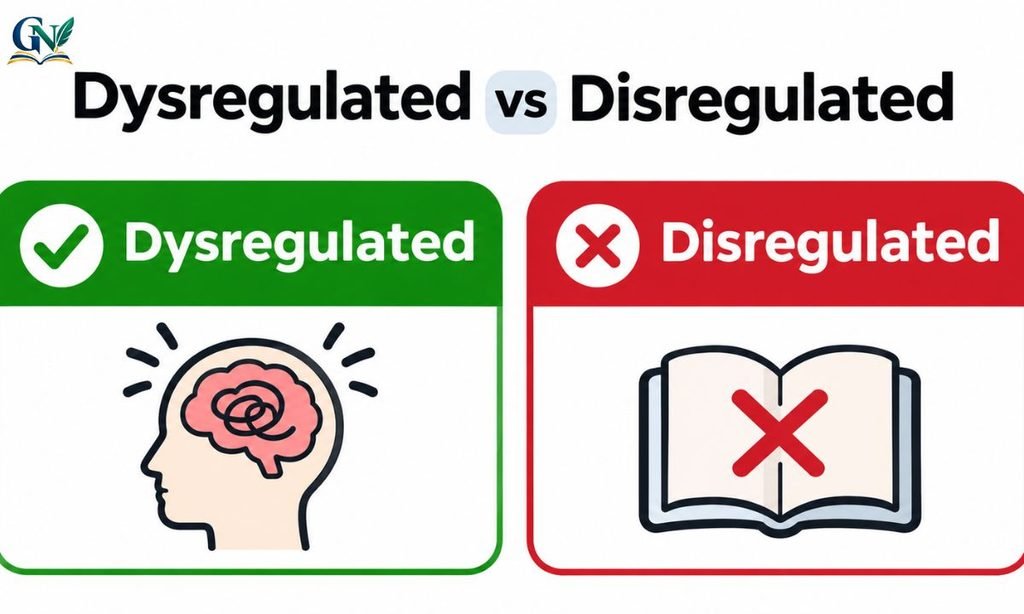
Use “dysregulated.” It comes from the prefix “dys,” which signals something faulty or abnormal. “Disregulated” is a spelling slip, and it can make professional writing look careless.
The Core Difference You Need to Know
One word is real. The other is a typo that spread. The table shows how they compare.
| Feature | Dysregulated | Disregulated |
| Status | Standard English | Nonstandard spelling |
| Prefix | Dys (faulty, abnormal) | Dis (apart, not) |
| Found in dictionaries | Yes, as dysregulate and dysregulation | Not as a standard entry |
| Used in psychology and medicine | Yes | No |
| Safe for formal writing | Yes | No |
Dysregulated vs disregulated examples

Correct: “After the argument, she felt dysregulated and couldn’t focus on work.”
Incorrect: “After the argument, she felt disregulated and couldn’t focus on work.”
Correct: “Inflammation can follow when the immune system becomes dysregulated.”
Incorrect: “The report blamed a disregulated immune response.”
Dysregulated vs disregulated child
A child who is dysregulated reacts to small frustrations with outsized distress, such as a meltdown over a broken cracker.
Parents and teachers use the term to describe a child whose emotional or physical state has tipped past what they can manage alone. The spelling stays the same here: “dysregulated child” is correct, and “disregulated child” is not.
What Does Dysregulated Mean? A Clear, Practical Definition
Dysregulated means poorly regulated: a response or process that is excessive, unstable, or badly managed. The American Psychological Association describes dysregulation in similar terms, as an excessive or poorly handled mechanism or response.
Think of a thermostat stuck on high. The heating system works, yet it can’t adjust to the room. People use the word the same way for moods, stress responses, hormones, and genes.
Understanding the Prefix: Why “Dys” Changes Everything
The prefix “dys” comes from Greek and signals something bad, difficult, or abnormal. You see it in dyslexia, dysfunction, and dystopia. Each one describes something that should work but doesn’t.
“Dis” has a different job. It usually means apart, away, or the opposite, as in disagree or disconnect. That meaning doesn’t fit a process that is simply working badly.
Why “Disregulated” Keeps Showing Up (Even Though It’s Wrong)
Plenty of “dis” words sit in everyday speech, so the brain reaches for the familiar pattern. Autocorrect and fast typing add to it. Social media posts also repeat the slip, which makes it look normal.
Why “Disregulated” Feels Right (But Isn’t)
Words like disorder, disrupt, and disorganized all describe things going wrong. That overlap makes “disregulated” sound sensible. Sound alone can’t settle spelling, though. The clinical term was built with “dys,” and it stayed that way.
Why “Dysregulated” Is the Correct Term
Medical and psychological literature uses dysregulation consistently. Wiktionary lists it as a failure to regulate properly, used chiefly in biochemistry. Researchers write about immune dysregulation and emotional dysregulation, never the “dis” version.
What Happens If You Use “Disregulated”?
Readers will probably understand you. Still, a clinician, editor, or search engine may treat the spelling as an error. In a blog post, résumé, or school paper, it can quietly weaken your credibility.
Spot the Difference
Look at the third letter. “Dys” has a y, and the y is the signal that something is faulty.
- Dysregulated: correct
- Disregulated: incorrect
Why You Won’t Find “Disregulated” in Dictionaries
Standard references list dysregulate, dysregulated, and dysregulation. The “dis” form shows up in casual posts and a few informal articles, but it hasn’t earned an entry. Spell checkers often flag it for the same reason.
When People Accidentally Use It
The slip happens most in fast texting, social posts, parenting forums, and wellness captions. People often type it while writing about stress or burnout, when they’re tired and moving quickly.
Quick Fix Strategy
Search your draft for “disreg” before publishing. Replace every match with “dysreg.” If you write on this topic often, add the correct spelling to your editor’s custom dictionary.
Memory Trick That Actually Works
Link the y to “yikes.” When something goes wrong in your system, you say yikes, and the y in dysregulated points to the same problem. You can also pair it with dysfunction, since both begin with the same faulty “dys.”
Don’t Let a Small Mistake Undermine You
One wrong letter rarely ruins a piece. On topics like mental health, though, accuracy builds trust. Getting the term right tells readers you took care with everything else.
Dysregulated Meaning in Psychology: Where It Matters Most
In psychology, dysregulation usually refers to emotional dysregulation: difficulty managing emotional responses so they fit the situation. The key idea isn’t having strong feelings. It’s reacting in a way that feels out of proportion and hard to steer.
It also shows up in discussions of stress, attention, and behavior, and it isn’t a diagnosis on its own.
What Emotional Dysregulation Looks Like in Real Life
Picture someone who snaps at a coworker over a small typo, then spends the evening ashamed. Or a person who goes numb and silent after mild criticism. Both examples show a response that doesn’t match the trigger, in either direction.
Dysregulated Emotions vs Normal Emotional Responses
Normal emotions rise and settle in step with events. Dysregulated emotions arrive faster, hit harder, or linger longer than the situation calls for.
Everyone has an off day. The pattern matters more than the moment, especially when it disrupts relationships, work, or sleep.
Dysregulated Nervous System
A dysregulated nervous system is one that stays stuck in alarm or shutdown instead of shifting back to calm. Wellness writers often link it to fight, flight, freeze, and fawn responses.
The phrase is popular in wellness conversations, yet it isn’t a formal medical diagnosis. Some commentators also argue the word is now stretched to cover almost any bad day.
Dysregulation in Biology: More Than Just Emotions
In science, dysregulation means a process has lost its normal controls. Genes can be dysregulated, which changes how much of a protein a cell makes. The immune system, hormones, and metabolism can also become dysregulated. In these cases, the word is purely technical.
A Common Mix-Up
Dysregulated is not the same as deregulated. To deregulate means to remove rules or oversight, as when a government loosens control over an industry. Mixing them up changes the whole meaning of a sentence.
Difference Between dysregulated vs disregulated
The difference is simple: one is a recognized word and the other is an error. Meaning stays identical when people use them, but only dysregulated carries accepted authority in schools, clinics, and publishing.
Mental Health Dysregulation: Conditions Linked to It
Emotional dysregulation appears in discussions of several conditions, including ADHD, bipolar disorder, borderline personality disorder, PTSD, anxiety, and depression. It isn’t unique to any one of them.
Disruptive mood dysregulation disorder is a formal diagnosis for children. A licensed professional should assess any concern.
Workplace Emotional Dysregulation
At work, it can look like sudden irritation in meetings, shutting down during feedback, or sending an angry email within minutes of a setback. A short pause, a walk, or a delayed reply often helps. Persistent patterns deserve support from a manager, HR, or a mental health professional.
Dysregulated Child Symptoms and Treatment
Common signs include frequent meltdowns, trouble calming down, explosive reactions to small changes, and trouble sleeping. Some children also withdraw instead of lashing out.
Help often combines predictable routines, calm co-regulation from a caregiver, skills coaching, and therapy. A pediatrician can rule out medical causes and suggest next steps.
How to Fix Emotional Dysregulation (Actionable Steps)
- Name the feeling. Saying “I’m furious” or “I’m overwhelmed” takes some intensity out of it.
- Slow your breathing. Longer exhales help signal safety to your body.
- Move your body. A brisk walk can burn off stress energy.
- Protect your basics. Sleep, meals, and water affect mood more than most people expect.
- Delay big decisions. Wait until the wave passes.
- Practice skills such as DBT or CBT with a trained therapist if the pattern continues.
Dys vs Dis Words: Why This Confusion Keeps Happening
English borrows prefixes from several languages, and “dys” and “dis” sound nearly identical. Both appear in words about problems. The result is a steady stream of mix ups. A short list helps.
- Dys words: dysfunction, dyslexia, dysphoria, dystopia
- Dis words: disorder, disconnect, disagree, discomfort
Signs of a Dysregulated Nervous System You Shouldn’t Ignore
- Constant irritability or sudden anger
- Racing thoughts or trouble sleeping
- Feeling numb, foggy, or checked out
- Strong reactions to noise, light, or touch
- Difficulty calming down after stress
- Frequent tension, headaches, or stomach upset
If these last for weeks or disrupt daily life, a doctor or therapist can help sort out the cause.
Quick Practice dysregulated vs disregulated
Pick the correct word.
- After the move, the toddler felt ___ and cried for an hour.
- Researchers found a ___ gene in the tumor sample.
- The editor circled “___” in red.
Answers: dysregulated, dysregulated, and disregulated (the editor circled the wrong word).
Key Takeaways You’ll Actually Remember
- Dysregulated is the correct spelling.
- Disregulated is a common error.
- The y in “dys” signals something faulty.
- Deregulated means removing rules, which is a different idea.
- Dysregulation is a description of a pattern, not a diagnosis.
Explore More Grammar Guide:
Manuel or Manual: How to Use Each Word Correctly 2026
Frequently Asked Questions
Is it dysregulated or disregulated?
Dysregulated is correct. “Disregulated” is a misspelling that standard dictionaries don’t list.
What does dysregulated mean in simple terms?
It means something isn’t being managed properly, such as emotions that swing out of proportion or a body system that has lost its balance.
What is the difference between dysregulated and deregulated?
Dysregulated means poorly controlled. Deregulated means rules or oversight were removed, usually in business or government.
What is a dysregulated child?
A dysregulated child struggles to manage emotions or reactions, often melting down over small triggers. A pediatrician or child psychologist can help find the cause.
Can a dysregulated nervous system be fixed?
Many people improve with sleep, movement, breathing practice, and therapy. Persistent symptoms should be checked by a healthcare professional.

Abdul Rehman is a grammar enthusiast and content writer at Grammarnesty, dedicated to making English grammar, punctuation, sentence structure, and writing skills easy to understand.


Pingback: Farther vs Further: Meaning, Differences & Examples (2026)
Pingback: Ladel vs Ladle: Correct Spelling and Examples Explained 2026